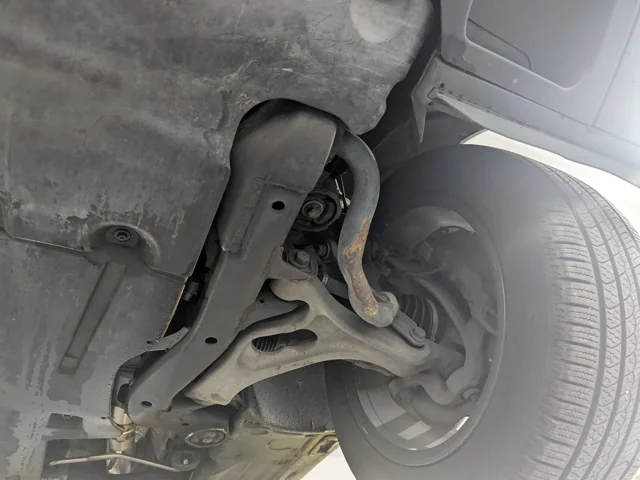
2013 Porsche Cayenne
An ownership story and documented WoolWax treatment for the miles still ahead.
View the case studyExplore lanolin protectionPreservation · Veteran Founded · Leonardtown, MD
Lanolin-based undercarriage protection for drivers in St. Mary's County and Southern Maryland — where road salt, moisture, and coastal air quietly attack frames, seams, and suspension long before anything shows.
Hard rubberized undercoatings form a shell — and when that shell cracks, moisture gets trapped underneath, where it can do more damage than no coating at all. Lanolin works differently. It stays flexible, and it creeps: into seams, spot welds, frame sections, and the crevices where corrosion actually starts.
For Southern Maryland vehicles, the math is simple. Between winter road salt, year-round humidity, and Chesapeake coastal air, the underside of your vehicle lives a harder life than the paint ever will. Preservation now costs a fraction of frame and component repair later.
Vehicles with heavy mud, severe rust scale, prior coatings, or unusual underbody access require assessment before service. Where specialized cleaning is appropriate, Precision Preservation Cleaning may be included in the larger program.
This service is for people who plan to keep what they drive: winter commuters, trucks that work for a living, classics worth preserving, and anyone in a coastal or rural environment.
What it is not: structural rust repair. It won't reverse existing corrosion, it isn't a permanent lifetime coating, and it's no substitute for fixing damaged metal. It's a preservation treatment that helps reduce future corrosion exposure — and we'd rather tell you that plainly than oversell it.
No. Rubberized undercoating forms a hard shell over surfaces. Lanolin stays flexible and migrates into seams and cavities where corrosion actually begins — protection that follows the metal instead of sitting on top of it.
No, and anyone who tells you a spray will is overselling. This treatment helps slow future corrosion exposure. Existing structural rust needs metal repair, and we'll tell you honestly if that's what we find at inspection.
Inspection timing depends on vehicle use, storage, weather exposure, prior treatment, and current condition. GT documents what is present and recommends the next sensible interval.
Some minor weeping can occur shortly after application, especially in warm weather, and lanolin carries a mild odor for the first few days that fades with use. We apply carefully to minimize both while still getting product where it needs to go.
Scope depends on vehicle size, access, contamination, existing coatings, corrosion, and preparation requirements. GT reviews those conditions before confirming the program.
Schedule a preservation inspection. We'll show you the underside's honest condition and exactly what the treatment covers.
Request Project Review Request a QuoteMatched photographs document the application across the Cayenne's underbody.
An ownership story and documented WoolWax treatment for the miles still ahead.
View the case studyExplore lanolin protection